


By: Marcus Hurst Mon, 23 Nov 2026
Legal, Land & Buying Guides, From the CEO's Desk, Recent Posts
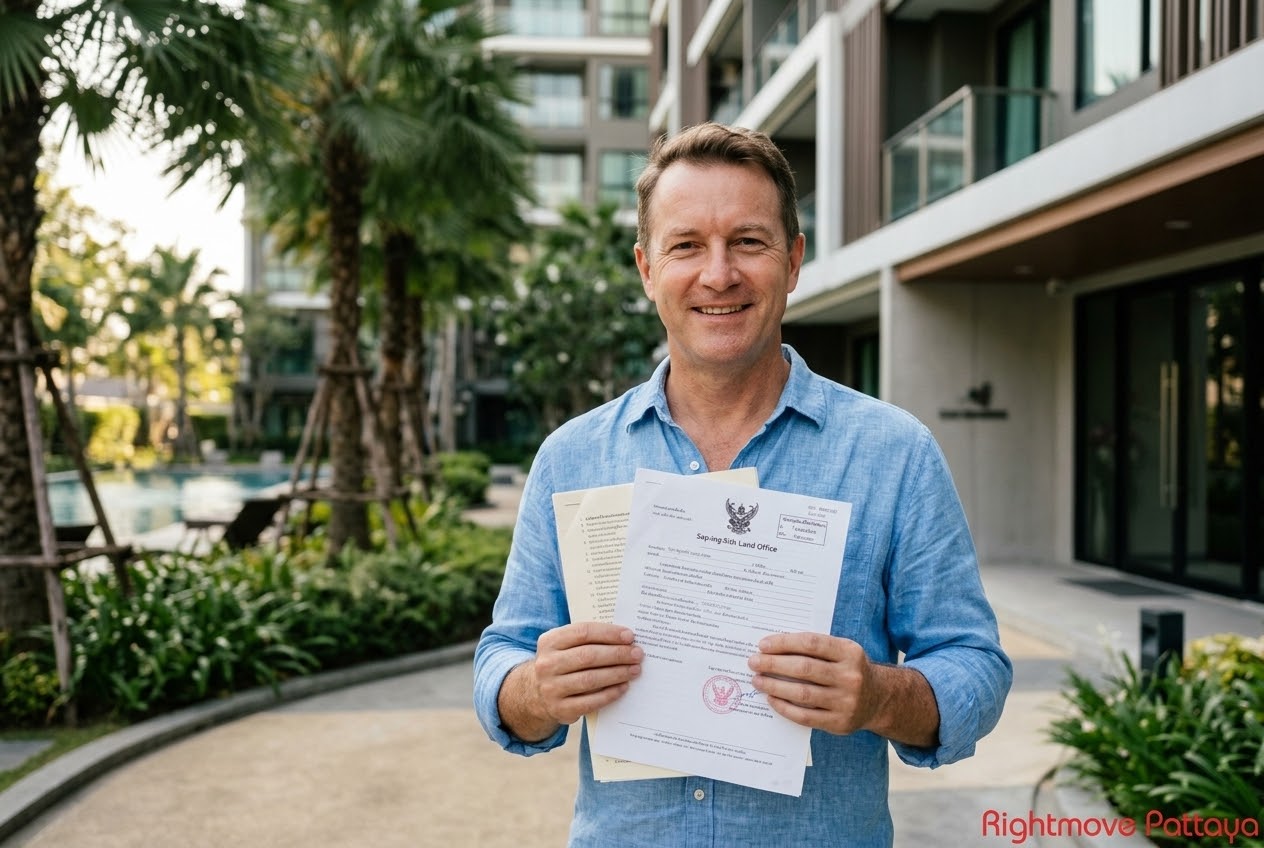
From the CEO’s Desk
By Marcus Hurst, Director & CEO, Rightmove Pattaya | November 2026
Sap-Ing-Sith in Thailand: A Guide for Foreign Property Buyers
Under the Thai Land Code, foreign nationals cannot hold freehold ownership of land. Whether you are purchasing a pool villa in Pattaya, a retirement home in Jomtien, or an investment property in East Pattaya, securing long-term tenure requires a compliant legal alternative.
Enacted under the Sap-Ing-Sith Act B.E. 2562 (2019), Sap-Ing-Sith is a statutory, property-based right allowing foreigners to legally occupy, use, and profit from Thai real estate for up to 30 years. Unlike a standard lease, Sap-Ing-Sith attaches directly to the property title, making it transferable, inheritable, and eligible for mortgage financing without needing a Thai limited company.
What Is Sap-Ing-Sith?
Sap-Ing-Sith is an official property right registered with Thailand’s Department of Lands. While the underlying freehold title remains with the Thai landowner, the registered holder gains enforceable statutory rights over the asset for up to 30 years.
It applies strictly to:
How to Register Sap-Ing-Sith in Thailand
Registering a Sap-Ing-Sith right involves four steps at the local Land Office:
Because the right is registered against the title deed rather than existing merely as a private contract, it remains valid even if the landowner sells the freehold land.
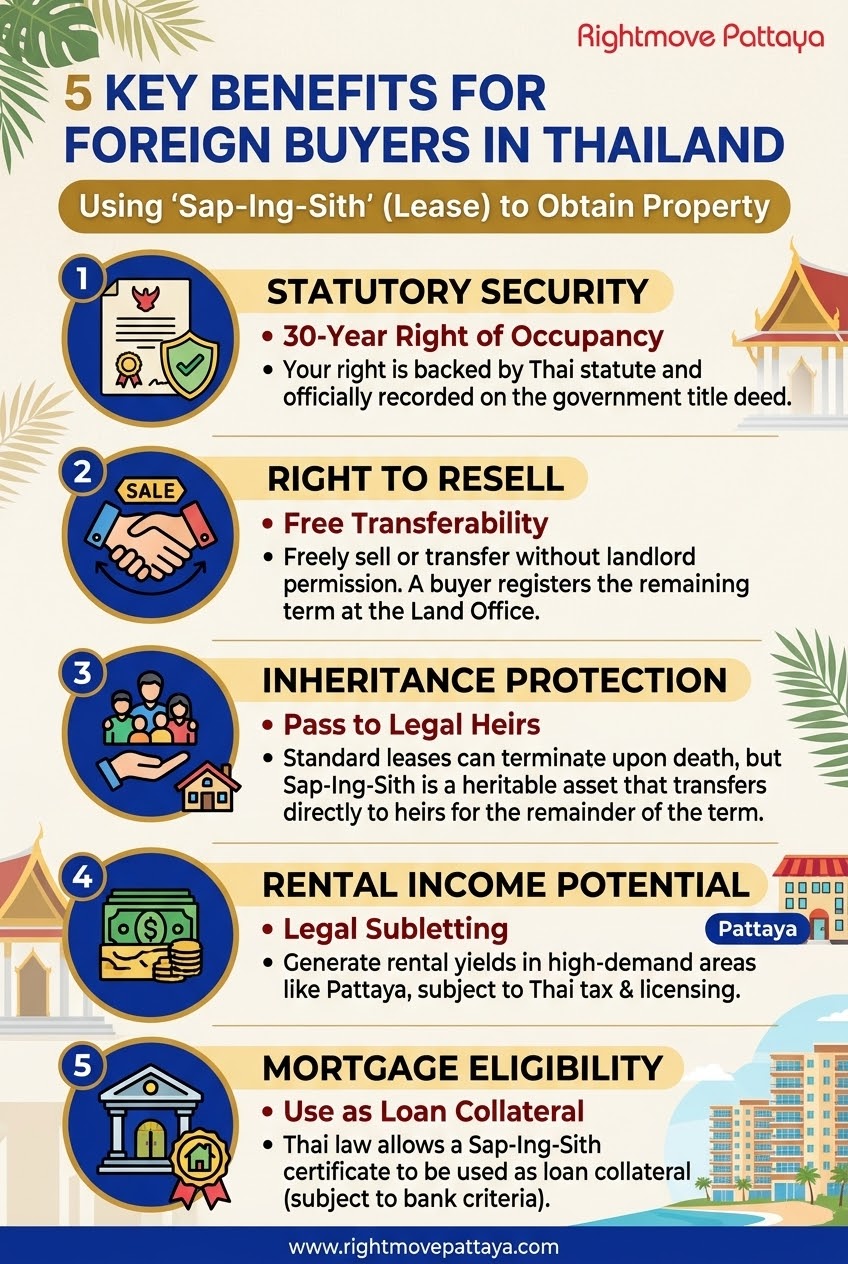
5 Key Benefits for Foreign Buyers in Thailand
Sap-Ing-Sith vs. Standard Thai Leasehold
|
Feature |
Sap-Ing-Sith |
Traditional Lease |
|
Maximum Term |
30 years |
30 years |
|
Land Office Registration |
Mandatory |
Mandatory (if over 3 years) |
|
Transfer / Resale |
Statutory right (no owner consent needed) |
Requires landlord approval |
|
Inheritance |
Automatically passes to heirs |
Terminates at death unless stipulated |
|
Mortgageable |
Permitted by law |
Not permitted |
|
Subletting / Rental |
Permitted unless restricted |
Prohibited unless expressly allowed |
|
Automatic Renewal |
No |
No |
Renovations and Term Expiration
Is Sap-Ing-Sith Right for Buying a Pattaya Villa?
For foreign buyers seeking a transparent, low-risk alternative to Thai company structures or restrictive leases, Sap-Ing-Sith is one of the strongest legal frameworks available in Thailand. Always engage an independent Thai property lawyer to conduct title due diligence and review your agreement before completing a purchase.
If you want to talk through how to apply for a 30 year lease, or how specific buyer requirements affect your plans in Pattaya, get in touch with our team at:
info@rightmovepattaya.com or call us on 038 410 434, 063 005 9699, or 092 563 8015.
Whether you are buying, selling, or investing, Rightmove Pattaya offers trusted, British-managed expertise backed by over 60 years of combined team experience. Located on Soi 15 in Central Pattaya, we operate out of the area's largest real estate office and as one of the very few agencies to own our own premises, our permanent roots in the city give our clients total confidence in the local market.